
2026 Pricing Guide
Construction Debris Removal in Chicago: What Actually Drives the Price
Junk Jaws · Chicago & Chicagoland
Most junk removal pricing advice assumes your load is bulky and light — old couches, boxes, a dead treadmill. Construction debris breaks that assumption. A bathroom’s worth of demoed tile can outweigh a living room of furniture while taking up a fraction of the space, and that single fact explains most of the confusion around what a debris haul should cost.
This guide is about the mechanics: how Chicago-area debris removal is actually quoted, why two jobs that look identical get different numbers, and where the money goes once the truck pulls away. If you want general household junk pricing instead, our guide to junk removal cost in Chicago covers that ground. For current rates on any job, the Junk Jaws pricing guide is the source of truth — rates change, and a blog post is the wrong place to pin them down.
Why construction debris prices differently than household junk
Junk removal is normally sold by volume. You pay for the share of the truck your stuff occupies. That model works cleanly when the material is roughly as dense as a dresser or a mattress, because the truck fills up and hits the road well before it gets anywhere near a weight limit.
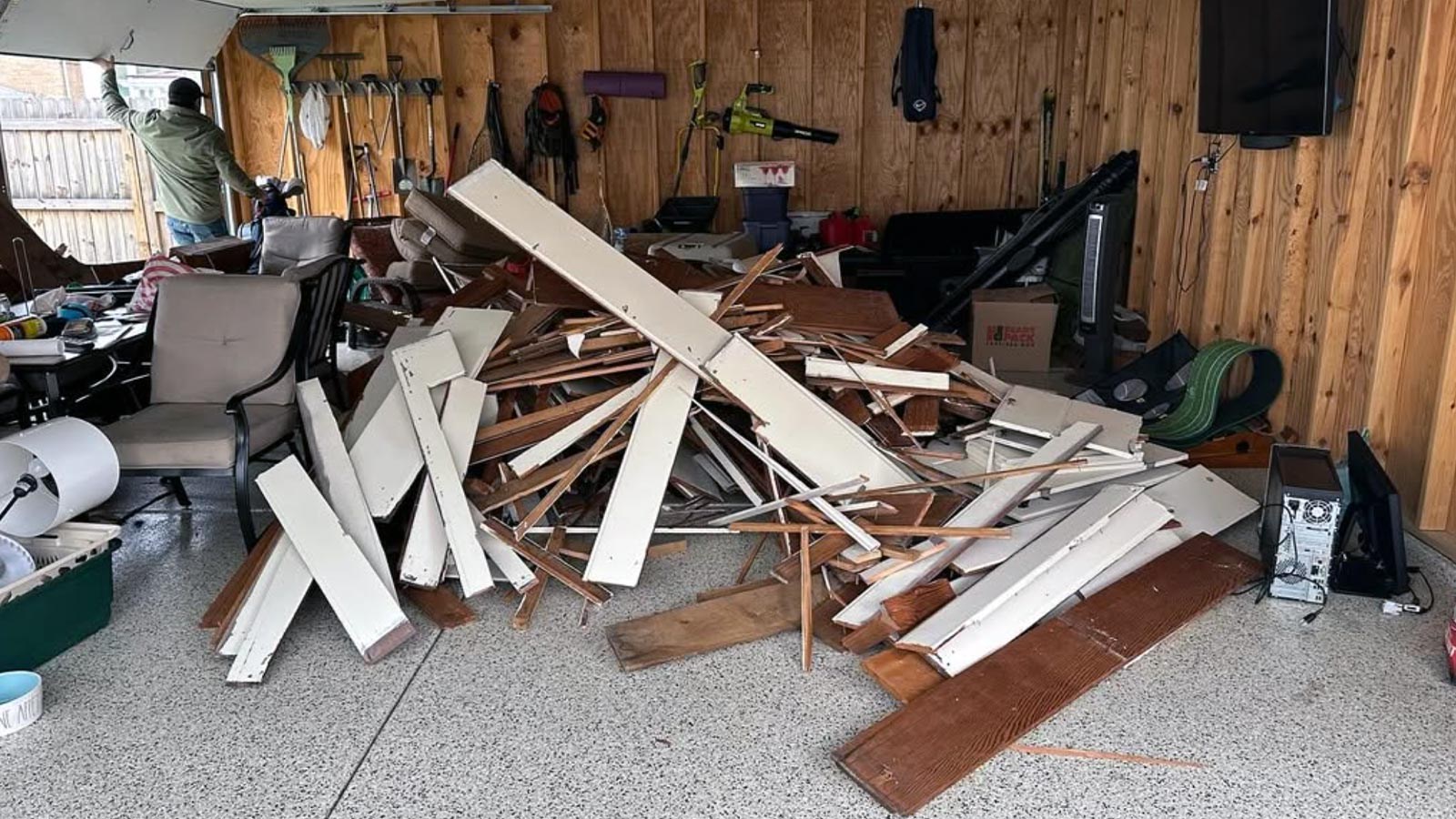
Construction debris inverts this. Concrete, brick, tile, mortar, and saturated drywall are heavy enough that a truck can reach its legal road weight while the bed still looks half-empty. The transfer station charges by the ton on the other end, so the cost of that load has almost nothing to do with the space it took up. This is why a contractor who tore out a small tiled bathroom and a homeowner who cleared a garage full of scrap lumber can generate similar-looking piles and get very different quotes.
The practical takeaway: when you are estimating a debris job, think in weight first and space second. That is the opposite of how you would size up a furniture removal or an appliance pickup, and it is the number one reason people are surprised by a debris quote.
How volume-based pricing works
Junk Jaws prices by volume: you pay for the space you use, and nothing else gets bolted on afterward. The reference point is the truck. Junk Jaws runs 18-cubic-yard trucks, which is larger than the 14- to 15-cubic-yard trucks common in the industry — that difference matters when you are comparing quotes, because a “full load” is not a standard unit across companies. A full load from a company with a smaller truck is less material than a full load here.
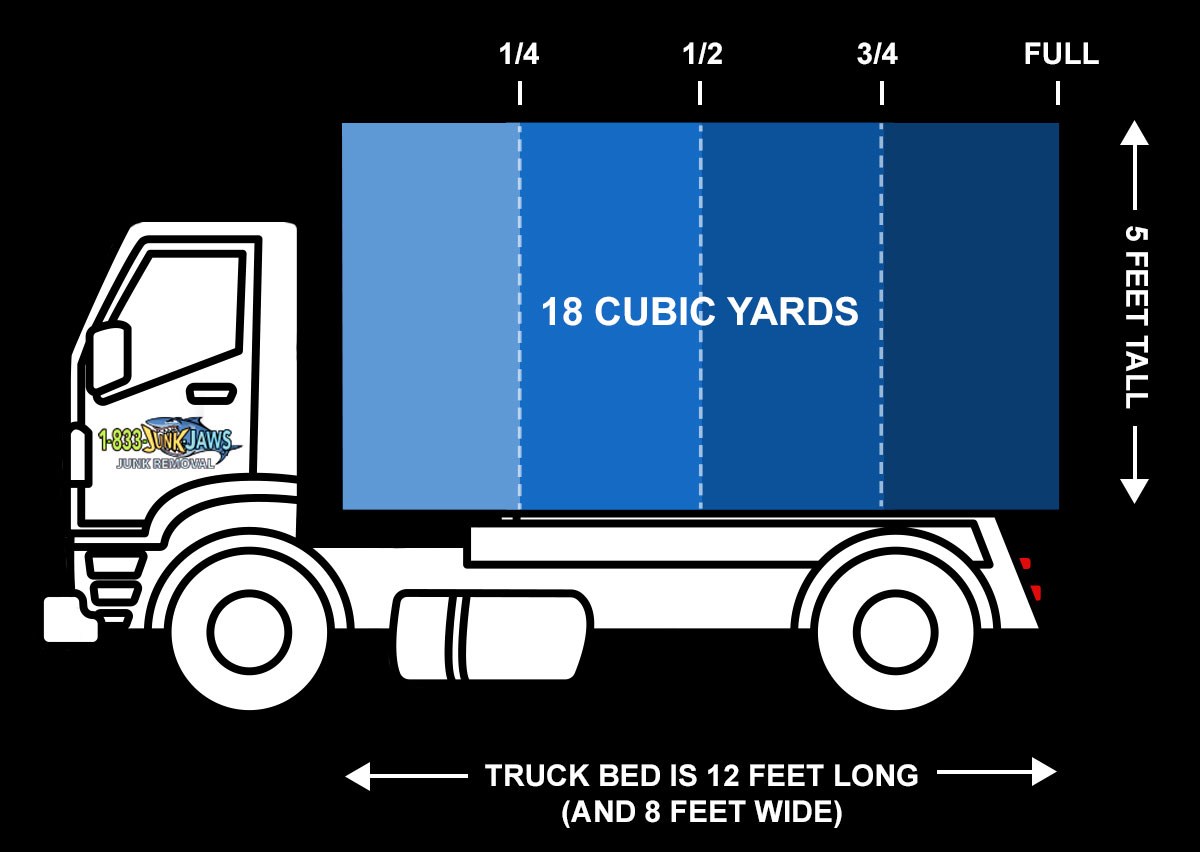
Loads are quoted in fractions of that bed. Here is how the fractions tend to map onto real Chicago construction jobs — no figures, because the current numbers live on the pricing page where they stay accurate:
| Load size | What it usually looks like on a job site |
|---|---|
| Quarter load | A single-room demo: one bathroom vanity and tile, a small deck tear-off, a stack of leftover drywall and trim from a bedroom remodel. |
| Half load | A full bathroom gut, a kitchen cabinet tear-out, or the accumulated scrap from a mid-sized renovation that has been piling up in the gangway. |
| Three-quarter load | A garage or basement clearance with a construction component — old shelving, framing lumber, doors, and drywall together. |
| Full load | A multi-room gut, a whole-basement demo, or a full roof tear-off staged in the yard. |
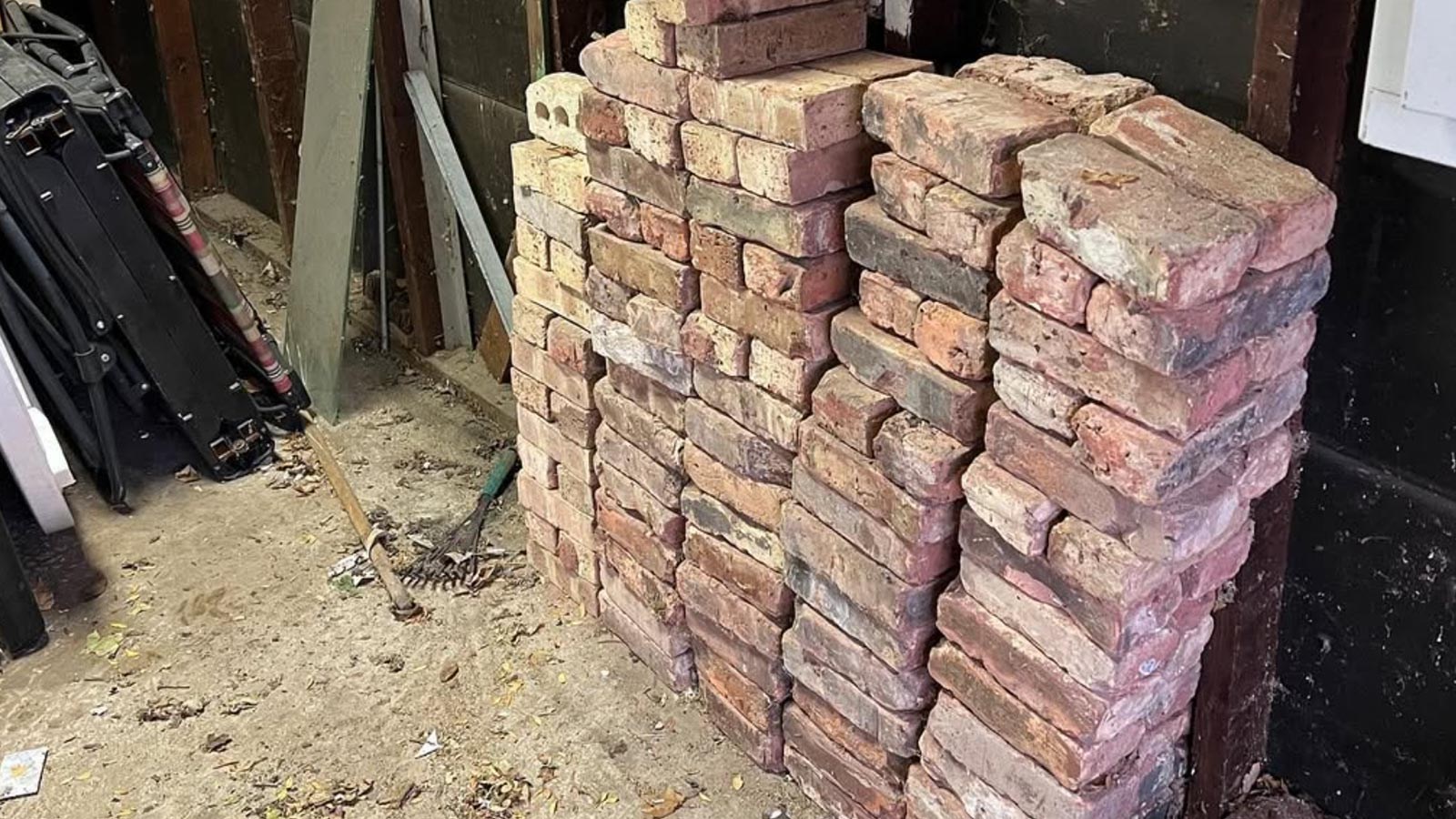
Dense loads are the exception to all of the above. When the material is concrete, brick, or dirt, the quote is assessed against weight rather than the fraction of the bed it fills, because the truck legally cannot leave with 18 cubic yards of masonry in it. If your project is masonry-heavy, say so when you call — it changes the conversation entirely.
Six things that move your quote
Two projects with the same square footage routinely land on different numbers. These are the variables that account for the gap.
1. Material density
The dominant factor. Tile, concrete, brick, and plaster cost more to dispose of than lumber, insulation, or cardboard because facilities charge by the ton.
2. Clean vs. mixed loads
A load of nothing but clean lumber or nothing but metal can go straight to a recycler. Mixed debris has to be sorted, and sorting is labor.
3. Where the debris sits
A curbside pile loads fast. A basement, a third-floor walk-up, or a pile at the back of a long Chicago lot means carrying every piece.
4. Access to the truck
Alley access, gangway width, permit parking, and street traffic all affect how close the truck can get and how long the carry is.
5. Phasing
One pickup after demo is cleanest. Debris that needs several visits across a long project is quoted per visit.
6. What is hiding in the pile
Anything hazardous stops the job. Asbestos, chemicals, and flammables are not eligible and have to be handled separately.
What the quoted number covers
Junk Jaws quotes up-front pricing with no hidden fees, and the number you are given is the whole job. Specifically, it includes:
- All on-site loading and labor. The crew does the lifting, the carrying, and the breaking down of oversized pieces. You do not move anything to the curb.
- Transportation. The trip to your site and the trip to the correct facility. For most jobs inside the primary Chicago service area there is no separate trip charge; a small fee can apply well outside it.
- Disposal fees. The tipping fees charged at the transfer station or landfill are already in the quote, not added later.
- Recycling and sorting. Wood, metal, and concrete are separated and routed to recyclers wherever possible rather than everything going to a landfill.
- The final sweep. The work area gets cleaned up after the load-out, so the next trade is not walking through nails and drywall dust.
One honest caveat: certain items that require special recycling handling — electronics and some appliances in particular — can carry a small environmental fee. It is disclosed before the work begins, and you can see how the whole structure fits together on the how it works page.
Curious what happens to the material after it leaves? We wrote about that separately in what happens to your junk after we haul it away.
What Junk Jaws takes — and what it cannot
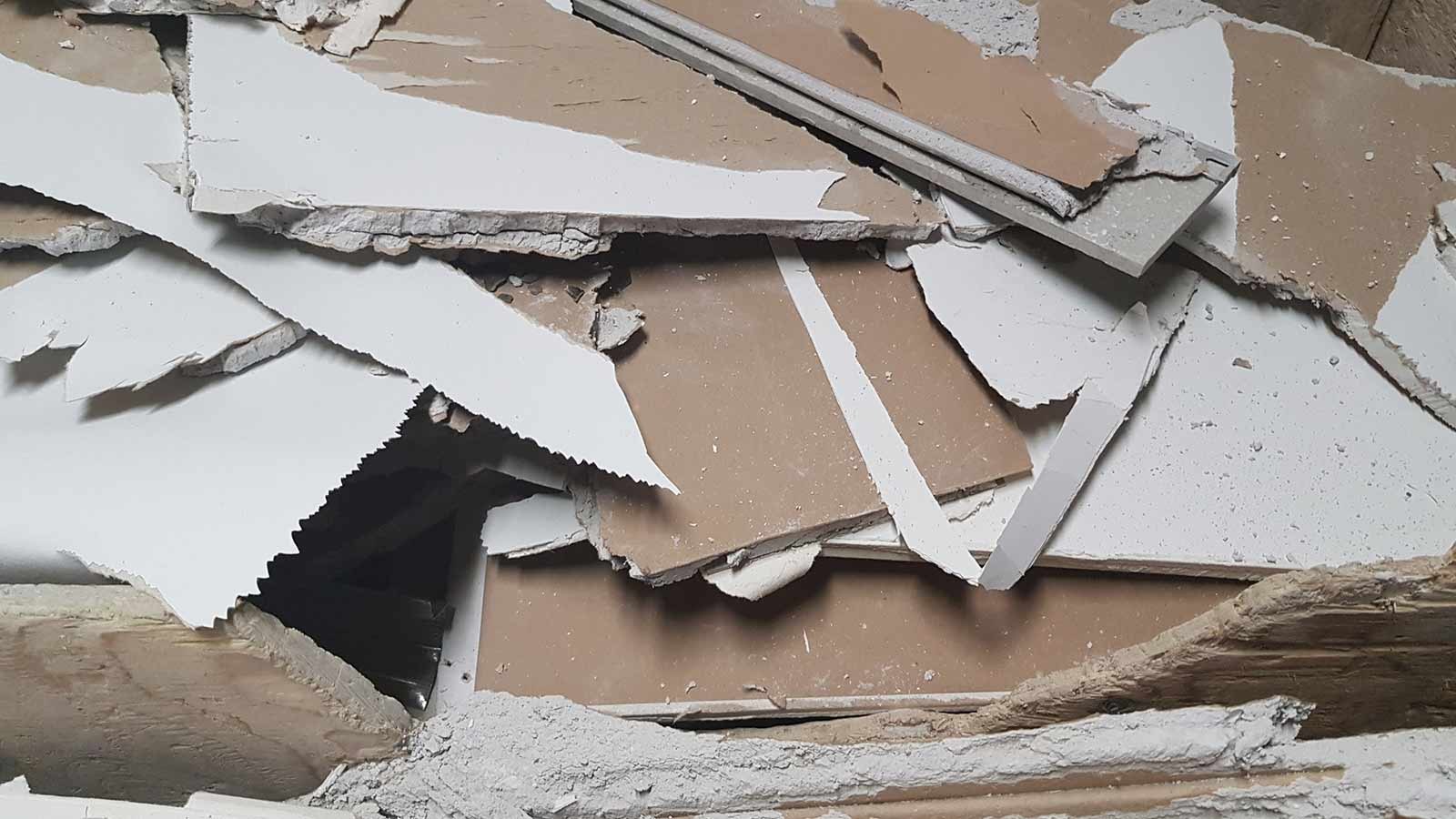
The construction debris removal service covers the standard streams from a Chicago renovation or demolition:
- Wall debris — drywall sheets, plaster, wood paneling, brick, concrete blocks, wall insulation, tile and grout, framing lumber, and metal studs.
- Roofing materials — asphalt, wood, and rubber shingles, metal roofing panels, clay and concrete tiles, slate, TPO and PVC membranes, and rolled roofing.
- Flooring debris — hardwood, laminate, vinyl, linoleum, bamboo, engineered wood, carpet and padding, ceramic and stone tile, baseboards, trim, and grout.
- Windows and doors — single- and double-hung, casement, sliding and bay windows; interior, exterior, French, sliding glass, and pocket doors.
- Commercial construction — metal studs, steel beams, ceiling tiles, insulation board, HVAC ductwork, electrical wiring, and plumbing pipe. See commercial junk removal for larger-scale work.
The debris side of a project often overlaps with a broader clearance. If your demo is bundled with clearing out a space, the garage cleanout, attic cleanout, and house cleanout pages cover those jobs, and the full service list has the rest.
Chicago’s 50% recycling rule
This is the part most national pricing guides miss entirely, and it is the part that can actually cost a Chicago contractor real money.
The minimum share, by weight, of recyclable construction and demolition debris that contractors on covered Chicago projects must recycle or reuse under Municipal Code Section 11-4-1905.
Chicago’s Construction and Demolition Site Waste Recycling Ordinance has been in force since 2006, and since 2007 the threshold has been 50% by weight of the C&D debris generated on site — excluding material contaminated by lead, asbestos, or other hazardous substances in a way that makes recycling illegal or impossible. Covered contractors have to track what they generate, and then demonstrate compliance to the Department of Public Health after the project wraps, backed by an affidavit from the hauler or recycler.
The consequences for skipping it are not theoretical. Contractors who miss the threshold or fail to document compliance in the required window can face fines, and the city can coordinate with the Department of Buildings to withhold permits or a certificate of occupancy. Nationally, construction and demolition debris accounts for roughly 30% of all solid waste generated in the United States, which is why cities regulate this stream specifically.
What this means for how you buy debris removal: your hauler is part of your compliance paperwork. If you are on a covered project, the affidavit from whoever hauls your debris is the evidence. Junk Jaws sorts and recycles wood, metal, and concrete wherever possible as standard practice. If your project needs documentation for a CDPH filing, raise it when you book rather than after the truck is gone.
Removal vs. dumpster: an honest comparison
Junk Jaws does removal, not container rental, so take this section with that in mind. The comparison is still worth making honestly, because the wrong choice is expensive in either direction.
When removal is the better call
- The project is short. A single-day demo, a tear-out, or a renovation wrap-up does not justify paying for a container to sit idle.
- There is a deadline. Closings, tenant move-ins, inspections, and the next trade’s start date all favor a crew that clears the site in one visit. Same-day and next-day service is available subject to availability.
- There is nowhere to put a container. Plenty of Chicago lots have no usable driveway. A truck parks briefly and leaves; a dumpster has to live somewhere for days.
- You are not loading it yourself. A dumpster is only cheap if your own labor is free. If you are hiring people to fill it, that math changes fast.
- The load is small. Below about a quarter of a truck, you are renting a lot of empty steel.
When a dumpster is the better call
- The project runs for weeks and generates debris continuously rather than in one burst.
- You have private space — a driveway or an on-site staging area — where a container can sit legally.
- You have crew on site anyway who can load it as they go.
The short version: project duration is the deciding variable. Debris in one burst favors removal. Debris in a steady trickle over weeks, with space to park a container and hands to fill it, favors a rental.
How to get a quote that matches the invoice
Quotes drift from final numbers for boring, avoidable reasons. Almost all of them come down to information that was not shared up front. Before you call, take two minutes and know these:
The materials, honestly — especially anything masonry, tile, or concrete.
Basement, third floor, back of the lot, or curbside — and the stairs in between.
Truck access: driveway, alley, permit-parked street, or narrow gangway.
- Photograph the pile from two angles. A photo settles a volume question in seconds that a description cannot.
- Flag dense material explicitly. “There is about a bathroom’s worth of tile and mortar in there” changes the quote structure, and you want that known before the truck arrives, not after.
- Mention anything you are unsure about. Suspected asbestos, old paint cans, solvents, propane. If it is not eligible, better to know now.
- Describe access without optimism. A “short walk” that is actually forty feet through a gangway and down four stairs is the most common source of quote drift.
- Separate clean streams if you can. Clean lumber in one pile, metal in another. Sorting is labor and labor is in your quote.
- Ask about the recycling affidavit if you are a contractor on a covered project and need CDPH documentation.
Junk Jaws provides a free, no-obligation quote based on your project’s size and materials. You can request a free quote online, check availability for a date, or call and talk it through. Junk Jaws is family-owned and operated, holds a 5.0 rating on Google across 600+ reviews, and serves Chicago along with Oak Park, Elmwood Park, Elmhurst, Arlington Heights, Bloomingdale, Deerfield, Glenview, Hinsdale, La Grange, Lombard, River Forest, and Rosemont — the full list is on the service areas page. It is also worth checking the current coupons before you book.
Frequently asked questions
How is construction debris removal priced in Chicago?
Why does concrete cost more to remove than drywall or lumber?
What is included in a Junk Jaws construction debris quote?
Can Junk Jaws remove asbestos shingles or other hazardous material?
Should I book debris removal or rent a dumpster for my Chicago project?
Does Chicago require construction debris to be recycled?
How fast can Junk Jaws pick up construction debris?
Does it cost more to remove debris from a basement or a third floor walk up?
Clear the site. Keep the schedule.
Same-day and next-day construction debris removal across Chicago and the suburbs. Labor, hauling, and disposal in one up-front number.
Or call (833) 586-5529 · Family-owned