
Pricing Guide
Junk Removal Cost in Chicago: What You’ll Actually Pay in 2026
Junk Jaws · Chicago & Chicagoland
Junk removal pricing in Chicago isn’t complicated once you understand how it’s structured. Most companies charge by truck space, not by the hour — so the faster you can estimate your volume, the better equipped you are to get a fair quote and avoid surprises. This guide breaks down what drives cost, what each load size typically covers, and where Chicago homeowners most commonly leave money on the table.
How Chicago Junk Removal Pricing Works
The most important thing to understand about junk removal cost in Chicago is that pricing is primarily volume-based. Companies charge by how much truck space your items occupy, measured in fractions as small as one-eighth of a truckload. Labor, transportation, and disposal fees are all bundled into that single price for most standard jobs. However, for larger cleanouts or jobs that require more than two hours of labor, an additional labor charge may apply — so it’s worth asking about that when you get your quote.

This means you don’t pay more because a couch is awkward to carry — you pay more if it takes up more space in the truck. The exception is heavy, dense materials like concrete, bricks, or roofing shingles, which are priced by weight because a small pile can weigh as much as a full truck of furniture.
Every job also has a minimum charge that covers the crew’s drive time, labor, and disposal — even if you only have one item. That minimum exists whether you’re in Elmhurst or Rosemont, so small single-item pickups are never going to be rock-bottom cheap.
Want to understand exactly what’s included before you book? See how Junk Jaws works — the process is straightforward, with upfront pricing confirmed on-site before anything gets loaded.
Pricing by Load Size
Most residential junk removal jobs fall into one of five load categories. These ranges reflect current Junk Jaws pricing for the Chicago area in 2026. For the most up-to-date rates, visit the pricing guide.
| Load Size | Truck Space | What It Typically Covers | Typical Range (Chicago) |
|---|---|---|---|
| Single Item | Under 1/8 truck | One chair, appliance, or mattress | $130 – $150 |
| Quarter Load | ~80–120 cu ft | Small garage corner, a few furniture pieces | $200 – $275 |
| Half Load | ~180–240 cu ft | Garage cleanout, single-room renovation debris | $300 – $475 |
| Three-Quarter Load | ~270–320 cu ft | Large garage, multi-room cleanout | $500 – $600 |
| Full Load | 15–18 cu yds | Full basement, garage, or whole-home cleanout | $700 – $775 |
Most Chicagoland homeowners scheduling a garage cleanout or whole-house cleanout end up in the half-to-full load range. Basement or attic jobs often trend toward the higher end because of access challenges.
Junk Removal Cost by Item Type
Item categories matter because weight and handling requirements can push costs beyond what volume alone would suggest. Here’s how specific types break down across Chicago-area haulers.
Furniture Removal
Furniture removal is priced per piece when booked as a single-item pickup, or rolled into load pricing when part of a larger cleanout. Armchairs tend to sit on the lower end; pianos and entertainment centers land at the top due to weight and disassembly time. The more items you consolidate into one trip, the better your per-piece cost becomes.
Mattress Removal
Sofa
Sectional
Need a mattress removed? Illinois law restricts mattress disposal in landfills, which affects how haulers handle them — and adds to the cost compared to standard furniture.
Sectional pricing varies based on size. Smaller sectionals typically run $275–$400, while oversized sectionals can exceed $500 depending on how much truck space they require.
Piano removal ranges from $350–$500 depending on the size of the piano and where it’s located in the home. Ground-floor pianos fall on the lower end; those on upper floors or in tight spaces will be closer to the top of that range.
Appliance Removal
Appliance removal starts at $150–$175. Refrigerators and freezers containing Freon require EPA-compliant refrigerant recovery before disposal, which adds to the cost beyond basic haul-away pricing. Hot tub removal is a separate category — those jobs involve disconnection, disassembly, and significant weight, putting them at the top of the appliance range.
See the dedicated hot tub removal page if that’s what you’re dealing with — it’s a different kind of job than standard appliance pickup.

Construction Debris
Construction debris removal is where Chicago homeowners most often get surprised by extra charges. Concrete, bricks, tiles, and roofing shingles price by weight rather than truck space. A wheelbarrow of concrete weighs several hundred pounds — that adds up fast. Renovation projects that mix light debris (drywall, wood) with heavy material (tiles, masonry) will see blended pricing.
Yard Waste and Outdoor Items
Standard seasonal yard cleanups run on the lower end of the pricing scale. Large volumes of branches, leaf piles, or old lawn equipment push costs up based on volume and weight. Yard debris removal is typically priced alongside other outdoor items like old furniture, grills, or swing sets — bundle them together when possible.
What Drives Your Final Junk Removal Bill
Volume First
Truck space occupied is the primary pricing factor. Companies measure in increments as small as 1/8 of a load. The more space your items fill, the higher the cost — regardless of how many individual pieces that represents.
Weight Surcharges
Dense materials like concrete, dirt, and roofing shingles are priced separately by weight. These can add significant cost to what looks like a small job on paper.
Property Access
Ground-floor curbside pickups cost the least. Basement and upper-floor removals require more crew time. Tight stairwells, no elevator access, or long carries all add labor cost.
Special Handling
Freon-containing appliances, electronics, and hazardous materials require specialized disposal procedures. These carry flat fees on top of standard volume-based pricing.
Distance and Zone
Your location relative to the company’s service zone and disposal facilities affects base rates. Outer Cook County and areas outside standard dispatch zones may see higher minimums.
Season and Timing
Spring and early summer are peak season in Chicago as renovation projects ramp up. Rush and same-day service during peak periods can add 15–30% to standard rates. Late fall and winter offer the most availability.
Premium commonly added for rush or same-day service during Chicago’s spring and summer peak season
How to Lower Your Junk Removal Cost in Chicago
A little preparation before the crew arrives can meaningfully reduce your bill. Here are three of the most effective things you can do.
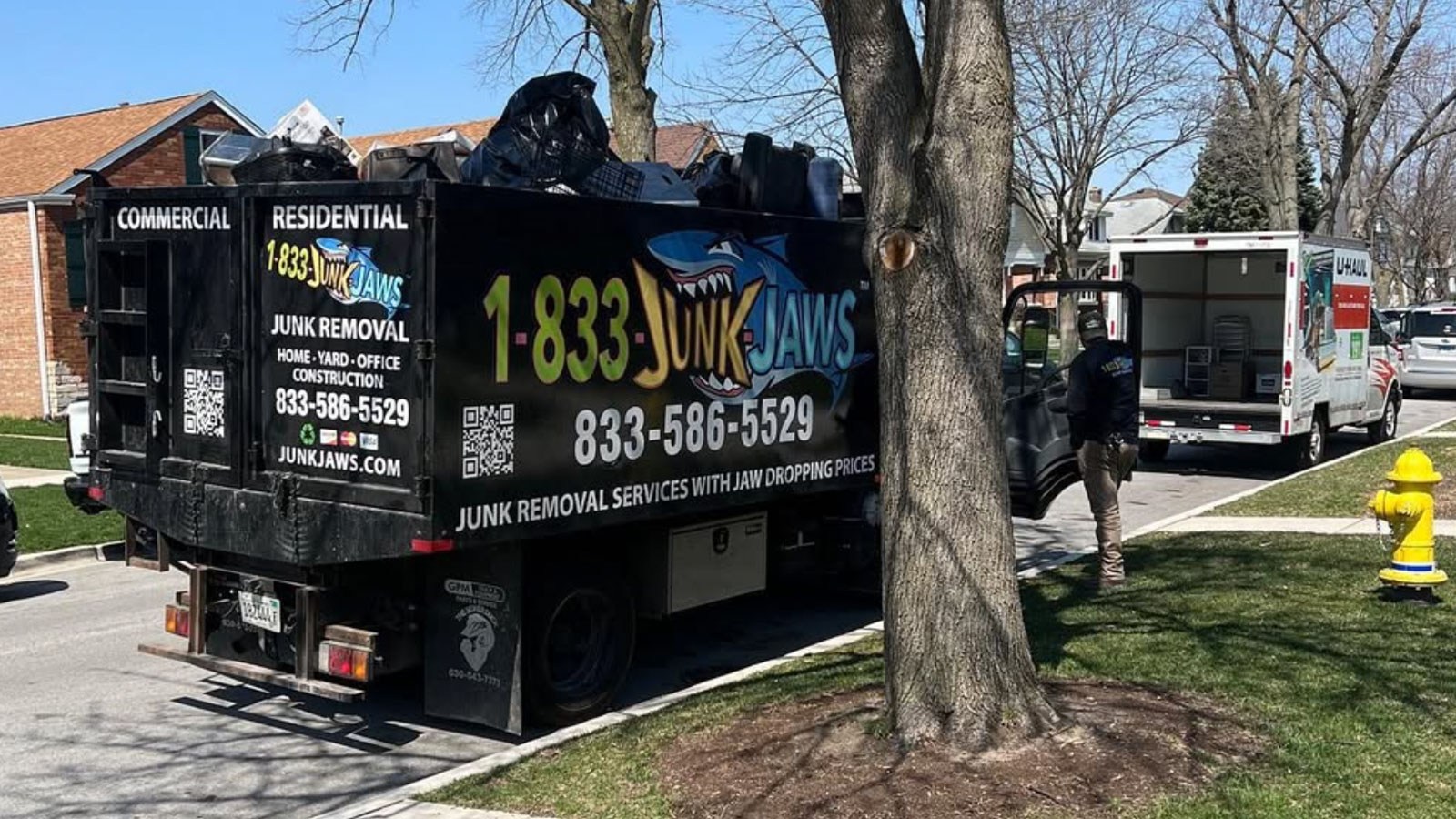
- Have everything organized and consolidated into one pile. Crews work most efficiently — and you pay less — when items are grouped together and ready to go rather than scattered across multiple rooms or areas. The less time spent locating and gathering items, the lower your overall cost.
- Bring items to curbside access if possible. Ground-floor and curbside pickups take significantly less crew time than basement or upper-floor removals. If you can move items to the driveway or curb before the crew arrives, you may meaningfully reduce your total — especially on larger jobs.
- Have bagged items already bagged and ready to go. Loose debris and small items should be bagged before the crew arrives. It speeds up the load, keeps the job tidy, and ensures smaller items don’t end up priced as a larger volume than they actually are.
Junk Removal vs. Dumpster Rental
These are two different tools for two different situations. Getting clear on which fits your project saves money and hassle.
Full-Service Junk Removal
A crew handles all the labor — loading, hauling, and disposal. Best for one-time cleanouts where you want the job done in a single appointment. You point, they lift. Works well for estate cleanouts, hoarding cleanouts, and jobs involving heavy or bulky items.
Dumpster Rental
You load it yourself over several days, then the company picks it up. Better for multi-day renovation projects where debris accumulates gradually. Typically lower total cost for equivalent loads — but you supply the labor and manage your own timeline.
If you’re doing a staged renovation across several weekends, a rental makes sense. If you’re doing a full attic cleanout, garage cleanout, or clearing out after an estate — where the job needs to happen in one clean sweep — full-service junk removal is typically faster and less physically demanding.
Specialty situations like storage unit cleanouts or eviction cleanouts almost always call for full-service removal, since dumpster placement at those locations is usually impractical.
Frequently Asked Questions
How is junk removal priced in Chicago?
Why do heavy materials like concrete cost more?
Do appliances with Freon cost more to remove?
Does it cost more to remove junk from a basement or upper floor?
When is the cheapest time to schedule junk removal in Chicago?
How can I reduce my junk removal bill?
Is a dumpster rental cheaper than hiring a junk removal company?
Does Junk Jaws serve areas outside Chicago?
Get a Free Quote — No Pressure, No Surprises
Junk Jaws serves Chicago, Oak Park, Elmhurst, Arlington Heights, Glenview, and surrounding communities. Upfront pricing confirmed on-site before anything gets loaded.
Or call (833) 586-5529 · Same-day service available