
Office De-Cluttering: Boosting Employee Productivity
By Joe Scorpio, Junk Jaws · February 20, 2026 · Chicago & Chicagoland
In the fast-paced corporate landscapes of Chicago and beyond, the physical state of a workspace is often a direct reflection of the mental state of its occupants. As modern offices transition toward open-concept designs and flexible hot-desking, the accumulation of physical debris—ranging from outdated paper files to broken hardware—can create a silent drag on company performance. An office de-clutter is no longer just a spring-cleaning ritual; it is a strategic business move designed to sharpen focus and eliminate the visual “noise” that competes for an employee’s attention. At Junk Jaws, we have witnessed firsthand how a cleared floor plan can revitalize a team’s morale. When a desk is buried under legacy equipment and dusty archives, the brain is forced to process those irrelevant stimuli, leading to cognitive fatigue before the workday even truly begins.
The modern workspace demands agility. High-growth companies frequently pivot, meaning furniture and equipment that served a purpose two years ago may now be literal roadblocks to collaboration. By prioritizing a comprehensive office de-clutter, leadership signals a commitment to excellence and professional clarity. This process involves more than just tossing a few old pens; it requires a systemic evaluation of what assets truly contribute to the bottom line. From the reception area to the back storage room, every square foot of your commercial lease is expensive real estate. Allowing that space to be occupied by “junk” is an inefficient use of capital. In this guide, we will explore the deep psychological and operational benefits of clearing the way for success, ensuring your office environment acts as a catalyst for innovation rather than a warehouse for the past.
The Psychology of a Clean Workspace
The link between environmental order and mental clarity is backed by significant neurological research. Studies from the Princeton University Neuroscience Institute suggest that multiple visual stimuli present in the field of view compete for neural representation. Essentially, the more clutter you see, the harder your brain has to work to filter it out, which saps the energy needed for complex problem-solving. In a professional setting, this manifests as procrastination and increased stress levels. When an employee sits down at a desk surrounded by stacks of “to-do” piles and obsolete electronics, their cortisol levels can spike, creating a subtle but persistent sense of being overwhelmed. This “background stress” erodes the ability to focus on deep-work tasks, leading to a workforce that is busy but not necessarily productive.
Furthermore, a clean office fosters a culture of discipline and respect. When the physical environment is maintained at a high standard, employees are more likely to hold their own work to that same standard. It creates a “broken window theory” effect in reverse: a pristine, organized space encourages organized thinking and precise execution. Beyond the individual, the collective psychology of the office improves when common areas like breakrooms and conference halls are free of surplus furniture and discarded items. It opens up the “flow” of the office, both literally and figuratively, allowing for better spontaneous communication and a more welcoming atmosphere for clients and new hires alike. Investing in a professional removal service like Junk Jaws ensures that this psychological reset is handled swiftly, allowing your team to return to a baseline of calm and focus without the burden of doing the heavy lifting themselves.
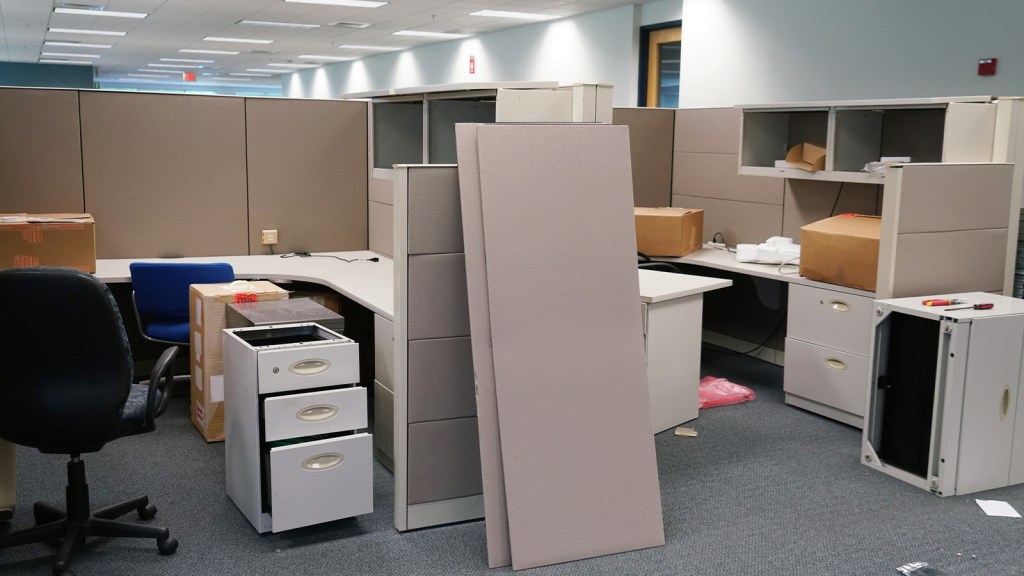
Common Office Clutter Culprits
- Obsolete Electronics (E-Waste): This includes “vampire” tech like old CRT monitors, tangled bundles of VGA cables, broken printers, and towers from 2010 that are taking up valuable corner space or closet room.
- Legacy Paper Archives: Despite the digital revolution, many offices still harbor filing cabinets full of decade-old invoices, outdated manuals, and duplicate records that should have been shredded or digitized years ago.
- Broken or Mismatched Furniture: Chairs with broken casters, desks with peeling laminate, and “temporary” folding tables that became permanent fixtures often clutter hallways and storage nooks, creating a disorganized aesthetic.
- Leftover Marketing Collateral: Boxes of flyers for events that happened three years ago, outdated branded merchandise (swag), and old banners for retired products often gather dust in expensive storage areas.
- Kitchen and Breakroom Accumulation: Abandoned appliances like crusty toaster ovens, mismatched mugs, and expired pantry items can make communal spaces feel unhygienic and uninviting for staff.
- Redundant Office Supplies: Overstocked stationery, dried-up markers, and specialized equipment for machines the company no longer owns often fill drawers that could be used for active project materials.
- Personal Item Overflow: While personalization is good, the accumulation of “desk toys,” old coats, and multiple pairs of shoes under desks can create a tripping hazard and visual chaos.
- Shipping and Packaging Materials: Stacks of empty Amazon boxes, bubble wrap, and wooden pallets from recent deliveries often sit in the lobby or loading dock longer than they should.
Quantifying the Productivity Impact
The financial cost of a cluttered office is often hidden but substantial. When employees spend even ten minutes a day searching for documents, tools, or clean meeting spaces, those minutes aggregate into hundreds of lost hours across a mid-sized firm annually. Beyond time lost to searching, there is the “transition cost.” Every time an employee is distracted by a messy environment, it can take upwards of twenty minutes to regain full “flow state” concentration. By performing a radical office de-clutter, you are essentially reclaiming those lost hours. A streamlined office allows for faster movement, easier access to necessary tools, and a significant reduction in the friction that slows down daily operations. Productivity isn’t just about working faster; it’s about removing the obstacles that prevent work from happening at all.
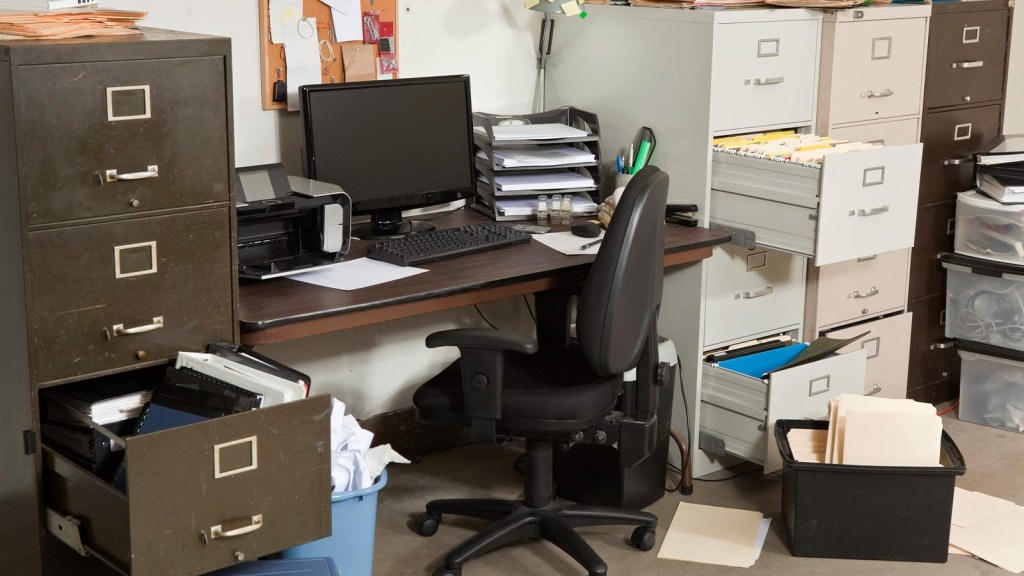
Another quantifiable aspect is the optimization of square footage. In a city like Chicago, commercial rent is a major overhead expense. If 15% of your office footprint is occupied by “junk”—old cubicle walls, non-functional tech, or storage for useless items—you are effectively paying a “clutter tax” on your lease every month. By clearing out the unnecessary, you may find that you have enough space to create a new collaborative “huddle” room, a quiet zone for focused work, or even downsize to a more efficient unit. This physical optimization leads to a more agile business model. When the environment is lean, the operations tend to follow suit. Utilizing a service like Junk Jaws allows you to see the true potential of your floor plan, turning wasted storage areas back into revenue-generating workspaces.
Sustainability and Professional Disposal
In the modern business world, how a company handles its waste is a reflection of its corporate social responsibility (CSR). Simply tossing office junk into a dumpster is no longer an acceptable standard. Professional junk removal involves a sophisticated process of sorting and diversion. At Junk Jaws, we prioritize the “Three Rs” (Reduce, Reuse, Recycle) to ensure that your office transition has the smallest possible environmental footprint. Many office items, especially furniture and electronics, contain materials that are harmful if they end up in a landfill but are valuable if recycled correctly. For example, metal filing cabinets and desks can be scrapped, while e-waste contains rare earth metals that must be harvested through specialized channels to prevent toxic runoff.
Moreover, much of what is considered “office junk” may still have life left for someone else. Part of a professional de-cluttering strategy involves identifying gently used furniture or supplies that can be donated to local non-profits, schools, or start-up incubators. This not only keeps items out of landfills but also strengthens your company’s ties to the local community. When you hire a professional team, you receive the peace of mind that your old assets are being handled ethically. We provide a chain of custody for your items, ensuring that sensitive hardware is disposed of in compliance with environmental regulations. This professional approach protects your brand’s reputation, showing clients and employees alike that your company values sustainability as much as it values efficiency and order.
Frequently Asked Questions
How long does a typical office cleanout take?
Do you handle sensitive documents or e-waste?
Can you remove heavy items like fireproof safes or industrial printers?
Is there anything you cannot take from an office?
Safety and Logistics of Commercial Removal
Performing a large-scale cleanout within an active business environment requires more than just muscle; it requires a logistical plan. Safety is the primary concern when moving heavy desks, metal cabinets, and bulky electronics through narrow hallways or elevators. Professional removal teams are trained in proper lifting techniques and use specialized equipment like dollies, ramps, and protective padding to ensure that neither the people nor the property is damaged during the process. When an untrained employee attempts to move a heavy credenza, the risk of a workers’ compensation claim or damage to the building’s drywall and flooring increases exponentially. By outsourcing this task, you mitigate these risks and ensure the job is done with professional precision.
Furthermore, commercial buildings often have strict requirements for service providers, including Certificates of Insurance (COI) and specific loading dock hours. Managing these logistics can be a headache for an office manager. A professional service like Junk Jaws is accustomed to working with building management to meet all insurance requirements and scheduling constraints. We understand the “etiquette” of commercial removals—staying out of the way of other tenants, keeping common areas clean during the move, and ensuring the loading dock is used efficiently. This level of professionalism ensures that your de-cluttering project doesn’t create friction with your landlord or neighbors, making the entire transition as smooth as possible from start to finish.
Conclusion
In conclusion, the state of your office is a silent partner in your business’s success or failure. A cluttered, disorganized workspace acts as a physical barrier to the very things every company strives for: efficiency, innovation, and employee satisfaction. As we have explored, the benefits of a cleared environment extend far beyond mere aesthetics. It reaches into the neurological health of your staff, reducing stress and sharpening focus. It optimizes your financial investment in real estate by reclaiming wasted space. It also reinforces your company’s brand values by demonstrating a commitment to sustainability and professional standards through responsible disposal and donation of old assets. In the modern workspace, where the lines between work and life are increasingly blurred, providing a clean, inspiring place to work is one of the most effective “perks” you can offer your team.
As you look around your office today, ask yourself: “Does this item help us achieve our goals for next year?” If the answer is no, it is time to let it go. Taking the leap to clear out the old can be daunting, but you don’t have to do it alone. Whether you are prepping for a move, downsizing your footprint, or simply resetting your current space for a more productive quarter, Junk Jaws is here to help. We provide the muscle, the logistics, and the ethical disposal methods needed to transform your office into a lean, mean, productivity machine. Don’t let yesterday’s clutter hold back tomorrow’s breakthroughs. Reclaim your space, re-energize your team, and set the stage for your company’s next chapter of growth with a professional cleanout today.
Ready to clear it out?
Junk Jaws is a family-owned crew serving Chicago and the surrounding suburbs. We do the lifting, the loading, and the disposal — you just point at the pile.

Joe ScorpioJoe writes for Junk Jaws, a family-owned junk removal company serving Chicago and the surrounding suburbs since 2022. More about the team.
Ready to make room? Let's haul it away.
Call our Chicago team for a free, no-obligation quote — or request one online and we'll get back to you the same day. Up-front pricing, no hidden fees, ever.